
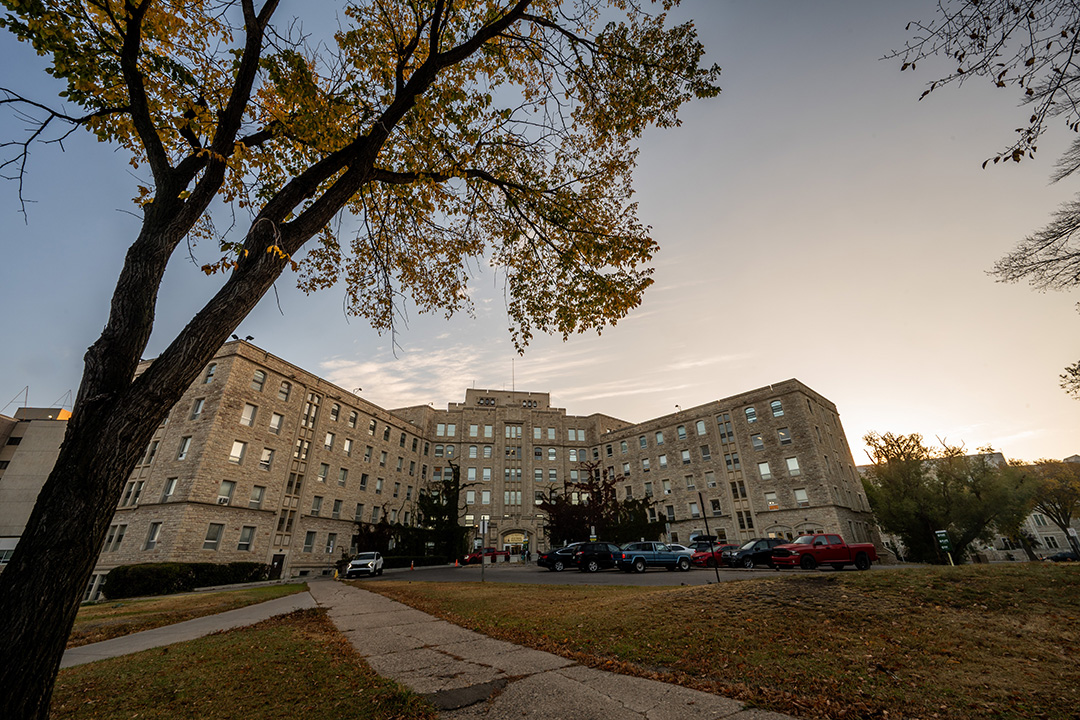
A Saskatchewan health legacy: The partnership between USask’s College of Medicine and the Royal University Hospital Foundation
A partnership through the decades.
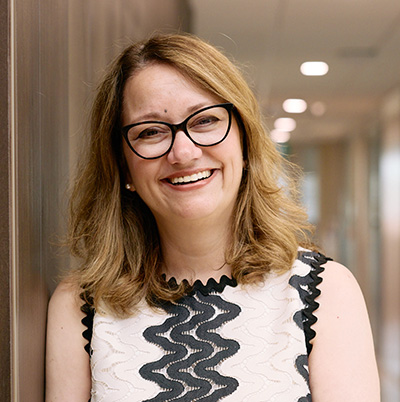
By Amanda WoroniukWhen Dr. Soo Kim (PhD), a researcher and professor in the University of Saskatchewan (USask)’s School of Rehabilitation Science, received the Royal University Hospital (RUH) Foundation’s Women Leading Philanthropy (WLP) grant in 2018, it was a catalyst for her research on pain reduction after mastectomy and reconstructive surgery.
Since 2018, the Foundation’s $100,000 WLP grant has inspired community-minded women to create meaningful change in health care. Like Kim, many of the WLP grant recipients have a connection to College of Medicine, with research projects focused on areas important to women’s health including oncology, neurology, and mental health.
“The Women Leading Philanthropy grant was truly instrumental in my research. It allowed me to build meaningful partnerships with breast cancer survivors across the province and foster new collaborations with researchers beyond Saskatoon. Most importantly, it provided the foundational knowledge that became a stepping stone to subsequent national-level grants and projects with team members.”
Kim’s research focuses on helping breast cancer survivors regain shoulder function after surgery. Using technology to analyze shoulder movement, she creates customized treatment plans to improve function. Her story is one example of the life-changing work made possible by the Foundation’s ongoing and generous support of the College of Medicine.
As the province’s only medical school, the College of Medicine plays an important role in educating future health-care leaders, advancing research that tackles real-world problems, and improving care for communities across Saskatchewan.
The opening of RUH in 1955, marked the beginning of a clinical-academic partnership. With the creation of the Foundation in 1984, that partnership expanded. Throughout the past 40 years, the Foundation’s investments have supported the college by funding research, equipment, physician fellowships and other health initiatives.
“Our enduring partnership with the Foundation has and continues to improve the health and well-being of the people of Saskatchewan,” said Dr. Sarah Forgie (MD), dean of the College of Medicine. “Our work together will make a lasting impact that benefits learners, researchers, physicians, patients and communities.”
Among the Foundation’s most impactful investments is the support for USask research chairs. These prestigious roles provide dedicated, long-term funding to advance innovative health research in Saskatchewan.
In recent years, the Foundation has supported chairs at the College of Medicine that have enabled researchers to focus on areas of strategic importance to the province, making a difference for patients and communities in the areas of cancer care and Indigenous health.
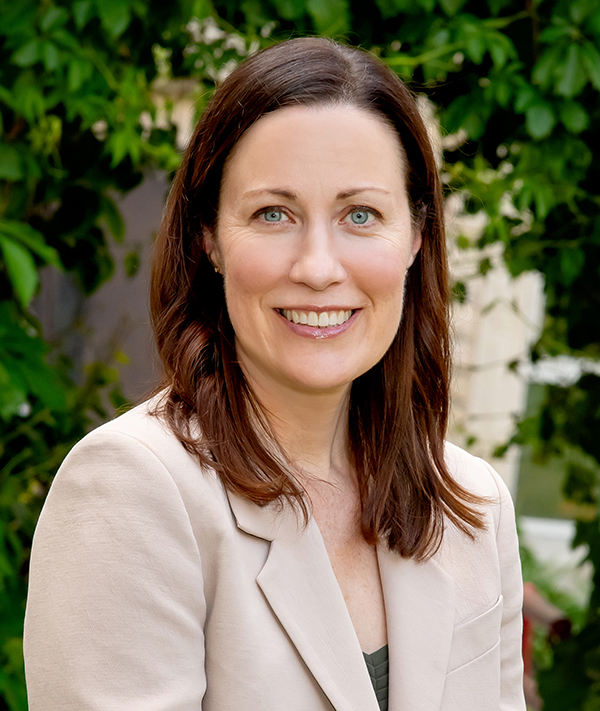
In 2019, Dr. Ron Geyer (PhD), a professor in the Department of Pathology and Laboratory Medicine, was announced as the Nutrien Chair in Clinical Research through a $1.5 million endowment. Research chairs like this one help drive innovation at the college and tackle Saskatchewan’s biggest challenges.
Geyer led a five-year cutting-edge research program to improve cancer outcomes. His work focused on developing new cancer diagnosis tests in Saskatchewan, enabling patients to receive their test results faster and leading to more timely treatment.
Geyer’s research also included clinical trials using imaging antibodies to better diagnose cancer and detect tumors with PET-CT scans and improve image-guided surgeries that make tumor removal more precise.
The Foundation’s impact at the college includes other research initiatives such as investing in the College of Medicine Research Awards (CoMRAD) for 2025-26. The CoMRAD program provides early-stage funding for innovative medical research (including pilot and feasibility studies). This support helps advance projects with the potential to improve health-care outcomes, and facilitate stronger applications to provincial, national and international funding opportunities.
Since its launch in 2016, CoMRAD has funded 259 projects, which has translated into 313 submitted proposals for research funding outside of the university, securing $29.2 million in awarded funds. With this new support, the college will be able to fund additional projects in the Foundation's priority research areas—health research, trauma research, mental health research, and children and youth research.
The Foundation also invests in specialized equipment that is used in USask medical education and research. These important tools include imaging machines, diagnostic technologies and state-of-the-art surgical equipment. By providing access to this technology, the Foundation helps the college prepare learners to deliver the highest standard of care and provides researchers with the tools to unlock new discoveries.
“As Saskatchewan’s largest teaching hospital, RUH plays a key role in learning and research,” said RUH Foundation CEO Jennifer Molloy. “Our donors see the value in investing in leading-edge technology, important research and training the health-care leaders who will shape the future of medicine in our province. Partnerships like the one we have with the College of Medicine help maximize the impact of our hospital – ultimately improving health care for everyone in Saskatchewan.”
Beyond research support, the Foundation has been instrumental in supporting physician fellowships, which is a period of advanced training that physicians pursue after finishing their residency. These fellowships provide physicians with financial support they need so they can fully dedicate themselves to strengthening their medical knowledge and clinical expertise.
Since 2005, 71 fellows have been supported by the Foundation, with many staying in Saskatchewan to work and practice once their fellowship is complete. By remaining connected to the province, these fellows provide specialized patient care, engage in teaching and help close gaps in care so that patients have access to high-quality specialized treatment close to home.
The partnership between the College of Medicine and the Foundation represents a commitment to improving the health and well-being of the people and communities across the province. It is an enduring partnership that has supported the next generation of learners, advanced cutting-edge treatment for diseases and provided better, more accessible care for patients. Together, this partnership is transforming health care and making a meaningful difference for the people of Saskatchewan.